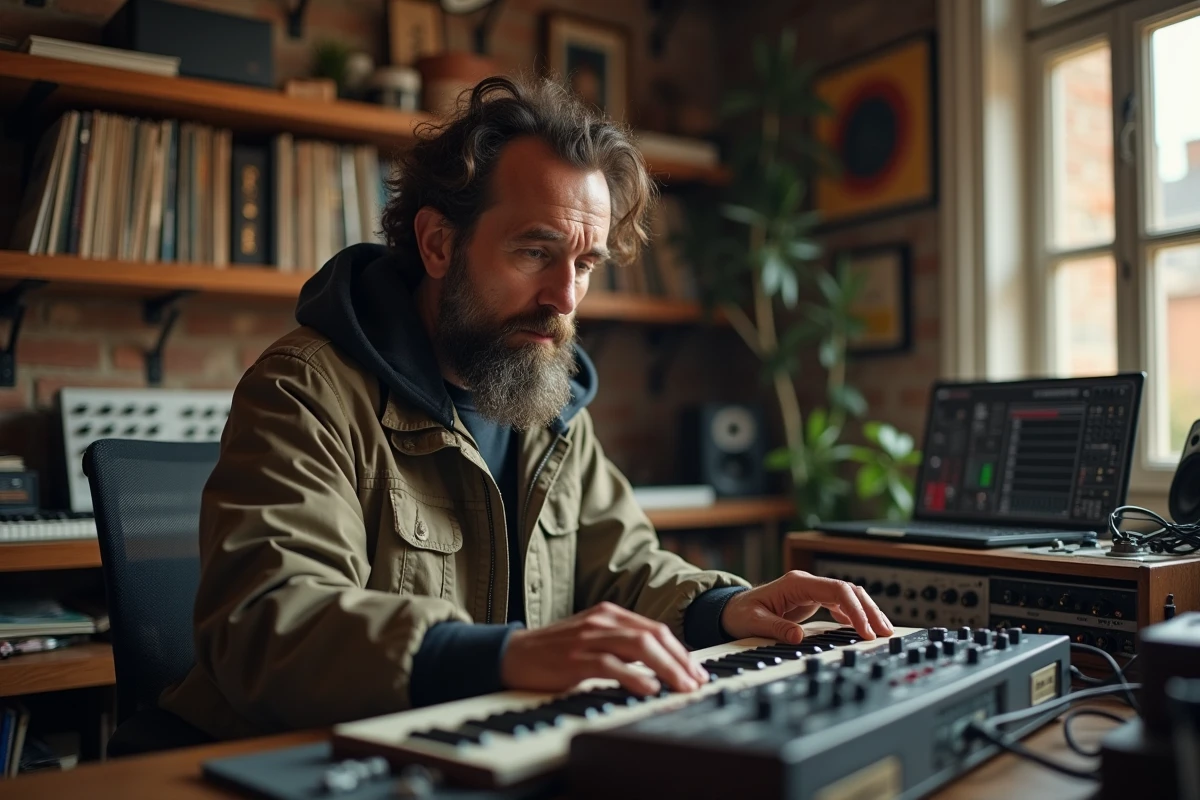
In 1980, a programmable percussion device was released in Japan, immediately ignored by the market. Its commercial failure did not prevent massive adoption a few years later in emerging musical genres, disrupting established conventions of sound production.
The code “808” refers to a machine, an aesthetic, and a technical reference, crossing several generations of artists and engineers. Behind this name lies a story made of diversions, unintentional innovations, and unexpected cultural mutations.
Why has the name 808 become a legend in music history?
The Roland TR-808 arrived in 1980, an analog drum machine among many others on paper. Yet, the vision of Ikutaro Kakehashi, founder of Roland Corporation, transformed a failed bet into an object of fascination. Production came to a halt after only twelve thousand units, sold almost in a rush, but the value of this machine exploded over the decades, reaching new heights today. While its value skyrockets among collectors, it is in the studio, on stage, or in the memory of popular music enthusiasts that the TR-808 has truly made its mark.
The term 808 goes beyond a simple serial number: it embodies a sonic rupture. Its deep bass kick, dry snare, metallic hi-hats, and that famous instantly recognizable cowbell shape the rhythmic silhouette of dozens of classics. It can be found in both Planet Rock by Afrika Bambaataa and Sexual Healing by Marvin Gaye, or on the album 808s & Heartbreak by Kanye West. 808 Day, every August 8th, brings together artists from all backgrounds to celebrate its impact: Prince, Dr. Dre, Aphex Twin, Metro Boomin, Beyoncé, New Order, Jamie XX… the list defies genre boundaries.
The meaning of the name 808 on Web United highlights this dual nature: a minimal technical reference, it has transformed into a musical banner, a transversal symbol whose aura continues to grow. The impact of the 808 is not limited to sound. It extends to culture, inspires history, stimulates collective creativity, and crosses all styles, from hip-hop to pop, from techno to R’n’B.
Between technical innovations and artistic upheavals: what the 808 really changed
The Roland TR-808 stands as a landmark in the evolution of music production. Thanks to analog synthesis, it offers a palette of sounds that sampling could not reproduce in the early 80s. Its abyssal round kick, incisive snare, and time-slicing hi-hats: in a single measure, the TR-808 leaves its mark, profoundly altering the rhythmic texture of urban and electronic music.
But the 808 did not just transform the toolkit of beatmakers. It opened rhythmic composition to a much wider audience, thanks to its intuitive handling. The step sequencer and customization of each sound offer new control over sound material, pushing creators to explore without safety nets.
To gauge the significance of the TR-808, one only needs to look at the genres where it plays a pivotal role:
- hip-hop: it structures breaks and establishes the “808” bass as an absolute reference
- techno and house: its claps and hi-hats lay down the rhythmic framework
- trap, EDM, R’n’B, pop: the 808 Bass reshapes the depth of the mix
When production ceased in 1983, due to a lack of components and the arrival of MIDI, the legend was already in motion. Today, digital reissues, recent models (TR-08, TR-8S), and software versions via Roland Cloud extend the adventure. The 808 has moved from being an instrument to becoming a true centerpiece of contemporary sound culture. It now reigns over collective memory, from studios to dance floors.
Resources and analyses to explore the 808 in networked music
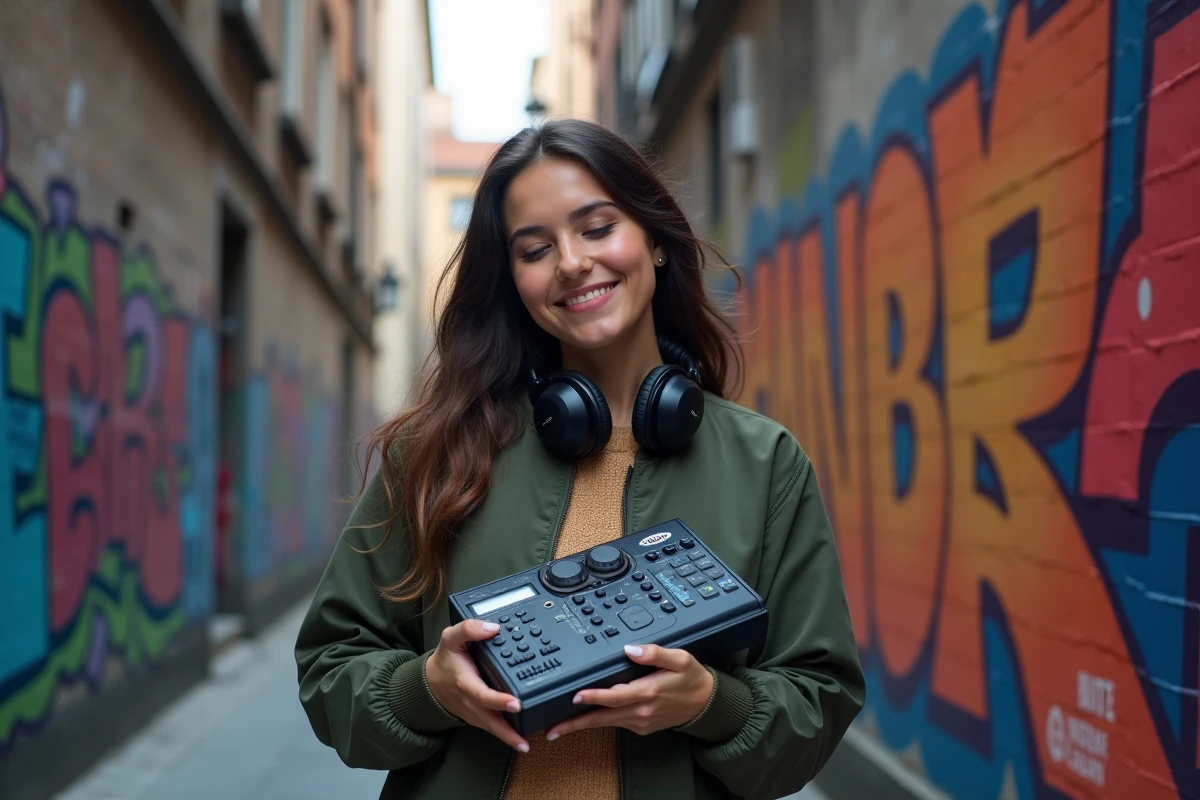
For those who want to delve deeper into the trajectory of the Roland TR-808 and its ramifications, the web is full of specialized resources. Roland multiplies interactive platforms and digital tools, like its Roland Cloud: the official plugin reproduces the unique grain of the 808, from the massive kick to the sharp hi-hat, allowing producers to compose, edit, and share patterns remotely. Collaborations and exchanges between creators take on a new dimension here.
Among recent initiatives, the Roland 50 Studio stands out. This online laboratory, developed with Yuri Suzuki, offers an immersion into the TR-808, but also the TB-303 or the SH-101. Users can manipulate virtual versions, test, record, compare beat structures, and exchange on collaborative servers. Here, sound creation is experienced collectively, in real-time, and the community grows with each shared session.
To go further, some festivals and platforms organize educational sessions, broadcast analyses of cult tracks, or open access to exceptional archives. Photos tracing the saga of the 808, artist interviews, insightful newsletters, and technical forums nourish a vibrant culture, between memory and innovation. From the dark room of the studio to the depths of the web, the 808 continues to spread its vibrations, inspiring generations to reinvent the rhythms of tomorrow.