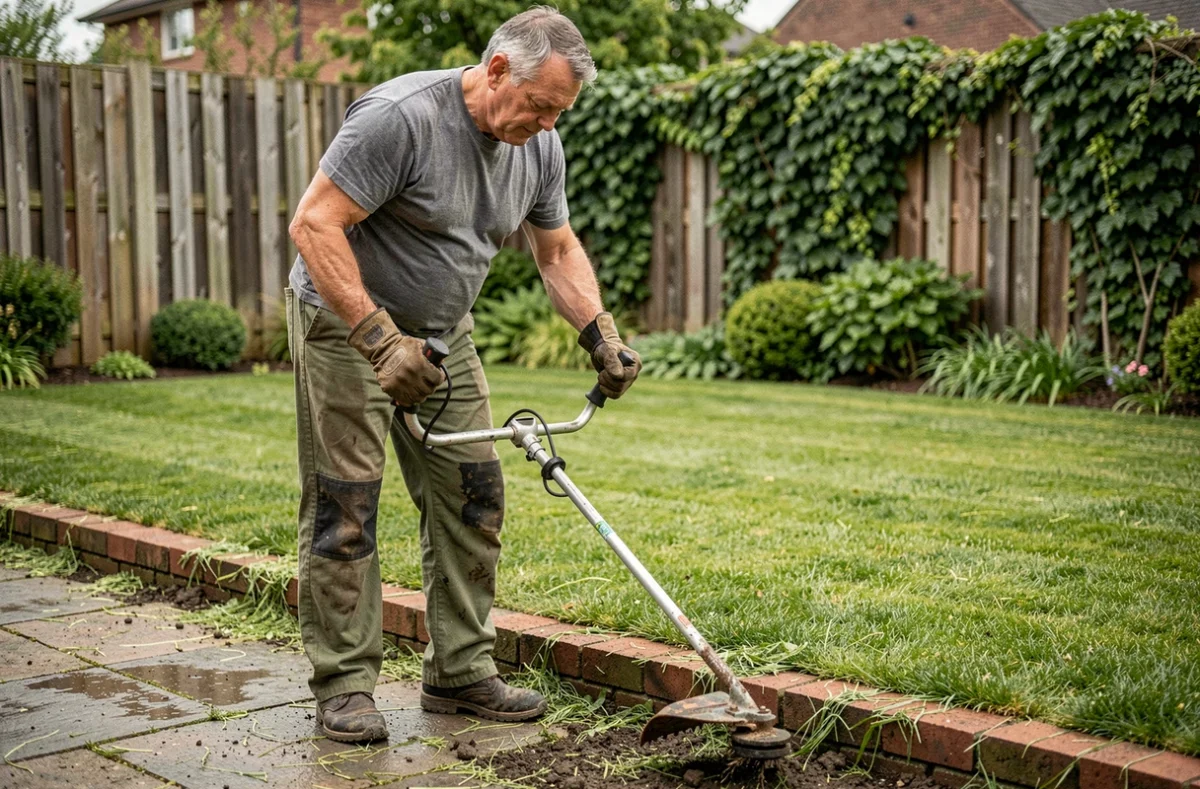
A petrol grass trimmer remains a go-to tool for large gardens or uneven terrain where there is no access to electricity. Its petrol engine gives it a level of autonomy that neither corded nor battery-powered models can match during long work sessions. Before buying one, it is worth carefully considering several technical factors, starting with one that conventional buying guides rarely address first: noise and its regulatory implications.
Petrol grass trimmers and noise pollution: a regulatory concern before a matter of comfort
A two-stroke or four-stroke engine produces significantly more noise than an electric or battery-powered model. The noise levels listed in technical specifications are based on standardised tests and are useful for comparing two models. They do not reflect how the noise is perceived by neighbours.
Permitted hours for using noisy gardening equipment depend on municipal or prefectural orders. According to an article in Dernières Nouvelles d’Alsace dated 20 October 2026, noise pollution can be defined by its duration, frequency and intensity, even in the middle of the day. In other words, using a petrol grass trimmer every weekend in a densely populated residential area can create a legal issue, not just an inconvenience.
Checking the rules that apply at your address with the local town hall before buying can help you avoid an unpleasant surprise. For a small adjoining garden of just a few hundred square metres, surrounded by homes, a battery-powered model may sometimes be a better choice: it is quieter and subject to fewer strict time restrictions. The model comparison available at coupebordurethermique.fr can help you assess the quietest petrol-powered alternatives when runtime remains a priority.

Engine displacement and type: what really determines a petrol grass trimmer’s power
The power of a petrol grass trimmer depends primarily on its engine displacement, measured in cubic centimetres. The larger the displacement, the better the machine can handle dense vegetation and woody stems. For routine trimming around lawn edges, wall bases or low hedges, a modest engine displacement is more than sufficient and keeps the machine lighter.
The choice between a two-stroke and a four-stroke engine affects day-to-day use. A two-stroke engine requires a fuel-and-oil mixture prepared in advance, uses more fuel and produces more emissions. A four-stroke engine runs on petrol without a premix, generally operates at lower revs and is somewhat quieter. The trade-off is that it is often heavier.
Stage V designation: check the technical specifications before trusting a label
Some manufacturers display the “Stage V” designation on their models, referring to the European emissions standard for non-road mobile machinery engines. The available regulatory sources mainly concern mobile machinery and construction equipment engines. There is no guarantee that this standard applies in the same way to handheld grass trimmers.
Before paying extra for a model advertised as “Stage V”, check the regulatory category listed in the manufacturer’s documentation to avoid overpaying for a vague marketing claim.
Cutting head and line system: technical choices that affect day-to-day maintenance
The cutting head determines the width of the cutting swath and how easily the consumable can be replaced. There are three main systems:
- Nylon line spools are the most common and come with manual, semi-automatic or automatic feed. Thicker line is more resistant to tough grass, but puts more strain on the engine. The line diameter must match the machine’s specifications.
- Plastic blade rotors, found on some models, replace the line with rotating blades. They provide a cleaner cut on short grass, but are less versatile when dealing with tall vegetation or working near hard surfaces, where the blades wear quickly.
- A combination head, compatible with both line and blades, lets you switch between systems depending on the job. It is the most versatile option, provided replacement consumables are available for the model you choose.
The cost and availability of consumables matter just as much as the purchase price when it comes to long-term costs. A model that uses universal line makes it easy to find supplies at garden centres or online, whereas a proprietary system requires you to order from the manufacturer.
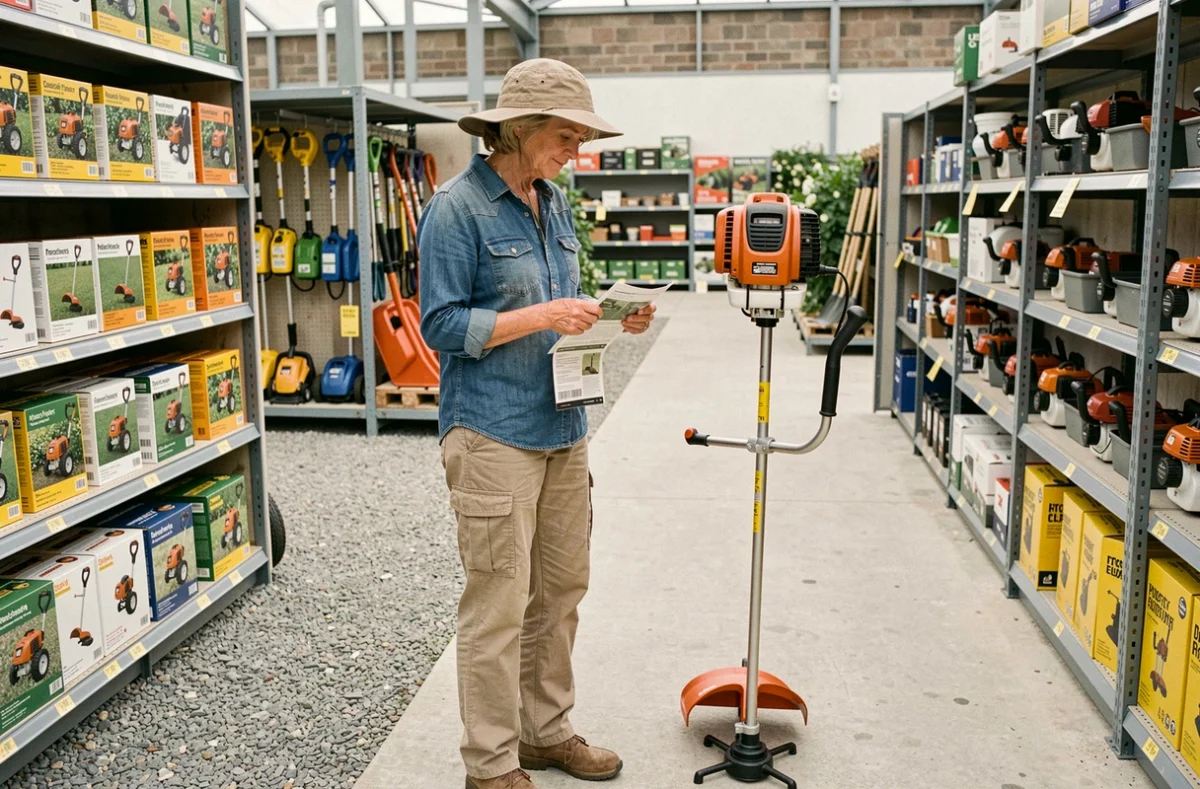
Ergonomics and storage requirements: what the technical specifications don’t tell you
Petrol grass trimmers vary in weight, from entry-level models to semi-professional machines. During a session lasting more than half an hour, an overly heavy machine can tire your arms and shoulders. A carrying harness distributes the weight and helps prevent lower back pain, especially on sloping or uneven terrain.
The shaft length, whether fixed or telescopic, should suit the user’s height. A shaft that is too short forces you to bend over, while one that is too long makes it harder to manoeuvre around flower beds. Straight-shaft models transmit power more effectively and can accommodate brushcutter attachments. Curved shafts are lighter and better suited to finishing work.
Storage and maintenance between seasons
The manufacturer’s manual sets out fuel and storage instructions. Leaving petrol in the tank for several months can clog the carburettor and make it harder to restart the machine in spring. Drain the tank and run the engine until it stops before putting the machine away for winter to extend its service life.
A clogged air filter reduces performance and increases fuel consumption. Checking and cleaning the filter after each extended use is one of the basic maintenance tasks that many users neglect.
Choosing a petrol grass trimmer is about more than comparing power figures. The garden’s surroundings, local noise restrictions, vegetation type and frequency of use all point to a different type of machine. The right model is one you can use without time restrictions, excessive fatigue or unpleasant maintenance surprises.