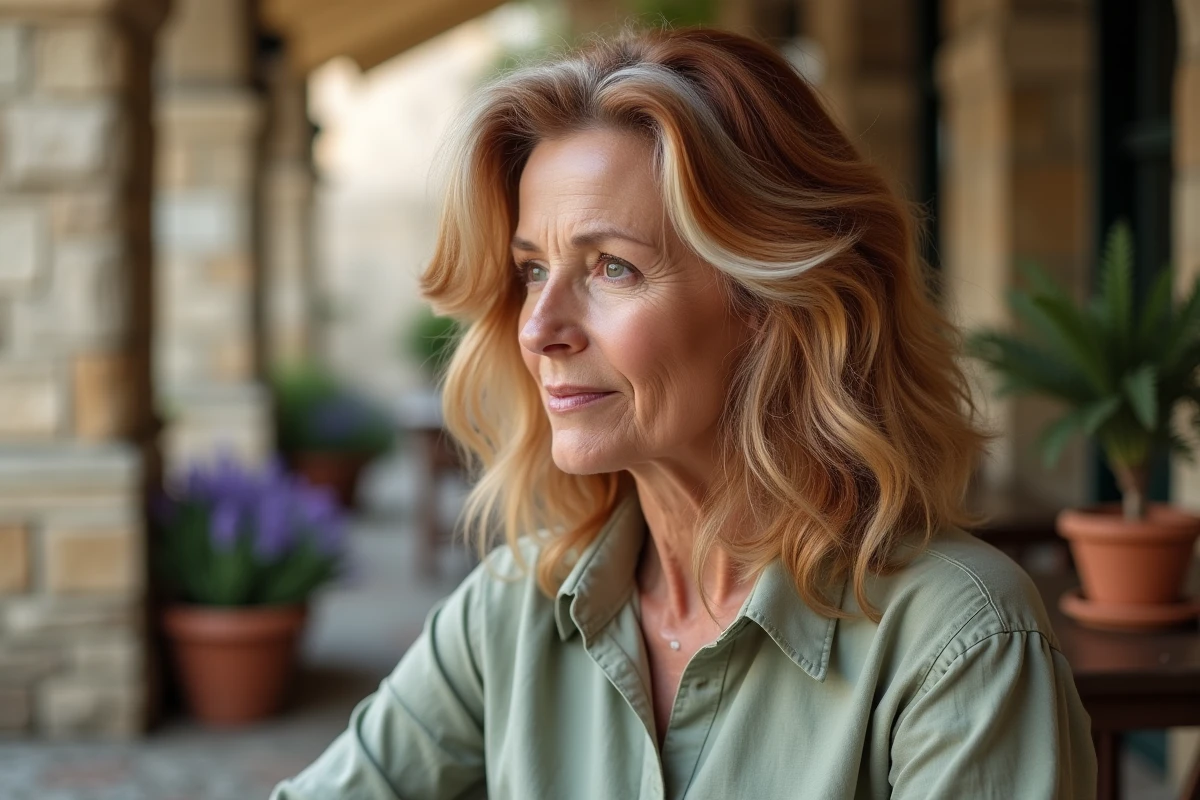
Red hair is the rarest natural color. Its pigmentation is based on a particular type of melanin, pheomelanin, which gives it shades ranging from copper to auburn. When graying occurs, the transition to white takes a different path than that observed in brunettes or blondes, both biologically and psychologically.
Pheomelanin and the MC1R gene: why red hair grays differently
The red color primarily depends on variants of the MC1R gene, which directs pigment production towards pheomelanin rather than eumelanin (the brown-black pigment). This genetic peculiarity is not limited to color: it also influences the longevity of melanocytes, the cells responsible for the pigmentation of the hair follicle.
Recent genetic studies show that variants of the MC1R gene are associated with an earlier appearance of white hair. The likely explanation lies in the increased vulnerability of melanocytes to oxidative stress as one ages. Pheomelanin, unlike eumelanin, provides less protection against free radicals that accumulate in the follicle.
Understanding the process of red hair and the appearance of white hair requires considering this specific fragility. The melanocytes of a red follicle deplete faster than those of a brown follicle, not because they produce less pigment, but because their biochemical environment exposes them more.
Scalp, sun, and oxidative stress in red-haired individuals
The combination of fair skin and sun-sensitive phototype, characteristic of red-haired people, does not only concern the face or arms. The scalp also suffers from the effects of UV rays, often without protection.
Recent dermatological recommendations emphasize a specific point: in red-haired individuals, this skin sensitivity increases the risk of oxidative damage to the scalp. Without regular sun protection for this area, hair depigmentation tends to accelerate from the age of forty. The hair follicle, already weakened by the MC1R genetic configuration, faces a double assault.
Factors that amplify graying in red-haired individuals
- Sun exposure of the scalp without a hat or filtering care, which generates free radicals directly in contact with follicular melanocytes
- Tobacco, which reduces microcirculation in the scalp and accelerates the depletion of pigment stem cells
- Deficiencies in copper, zinc, or vitamin B12, which alter melanin synthesis and can hasten the transition to white
These factors are not exclusive to red-haired individuals, but their impact manifests earlier and more visibly on red hair than on brown or black hair.
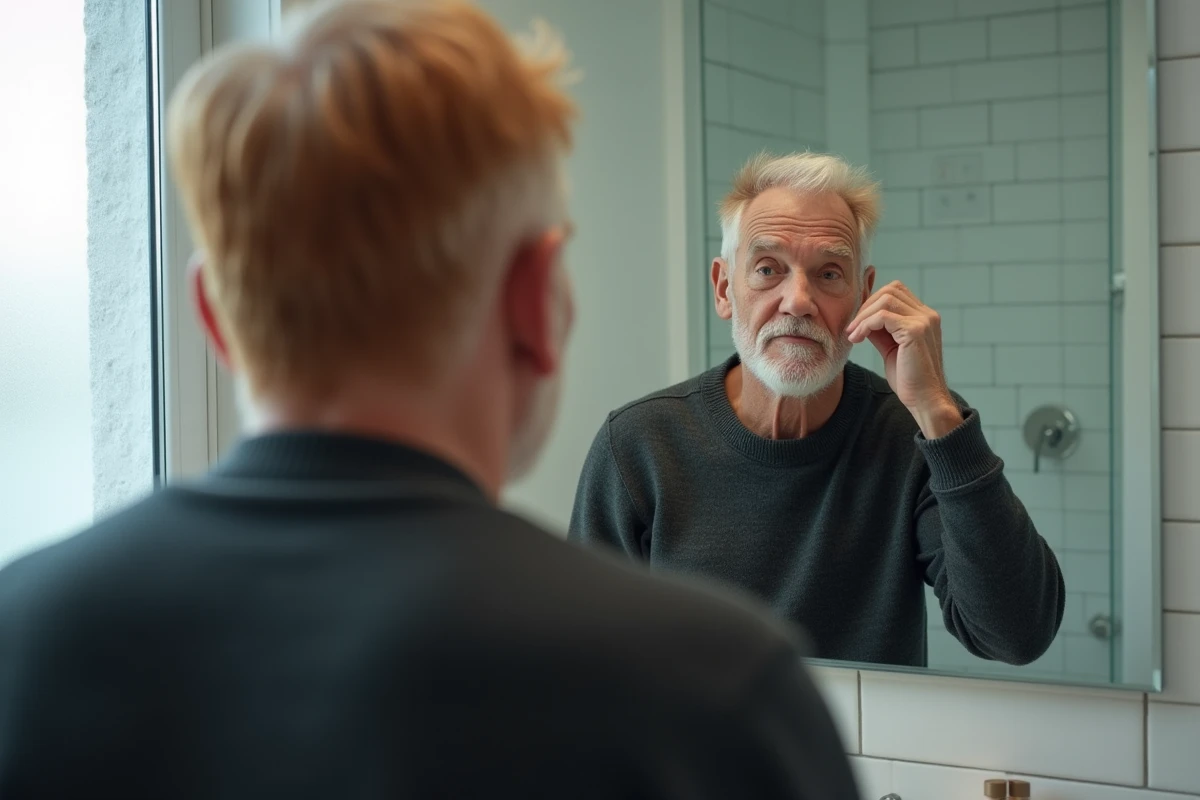
Red hair and white hair: a visible transition that weighs on self-image
Graying is experienced differently depending on the original color. Feedback from dermatology and medical hairdressing highlights that red hair masks white hair less effectively than very light blond hair, but better than black hair. This intermediate position creates a particular situation.
The first white strands, when they appear on a coppery mane, create enough contrast to be quickly noticed. Red-haired individuals seek solutions for coloring or preventive care (topical antioxidants, targeted supplements) earlier than average. The relationship with graying here is inseparable from the identity question.
When hair color becomes a personal marker
Being red-haired, in many cultures, is a strong distinctive trait. Red hair constitutes a significant part of a person’s visual identity. Losing this color in favor of white does not merely represent a sign of aging: it is the gradual disappearance of a trait that has structured others’ perceptions since childhood.
This psychological experience explains why choices regarding graying differ. Some red-haired individuals opt for plant-based henna coloring, which preserves natural coppery highlights. Others choose to embrace the transition, but this decision is rarely made without hesitation. Accepting gray means giving up a central element of one’s appearance, which creates a more conflicted relationship with graying than in brunettes or chestnuts.

Coloring, prevention, and hair care suitable for graying red hair
The care and coloring options are not the same for red hair and brown hair. Pheomelanin gives the hair a specific structure and porosity that influences the hold of chemical colorings.
- Natural henna remains the plant-based coloring most compatible with red hair, as it deposits orange to copper pigments without altering the hair fiber
- Low-ammonia tone-on-tone colorings cover white hair while preserving the red hue, but their hold is often shorter on highly porous hair
- Topical antioxidants (vitamin E serums, peptide copper treatments) aim to protect still-active melanocytes from oxidative stress, without guaranteed results but with a coherent biological rationale
- Sun protection for the scalp, through UV mist or wearing a hat, is the simplest and most overlooked preventive measure
The available data do not allow us to conclude that a dietary supplement can significantly delay graying. However, correcting a proven deficiency in zinc, copper, or vitamin B12 can support the residual production of melanin.
A transition to white that rarely happens in a straight line
The transition from red hair to white often goes through an intermediate copper-golden phase, then a very pale Venetian blonde before reaching pure white. This gradual gradient, specific to pheomelanin, offers an aesthetic advantage that brunettes do not have: the gray phase is less dull and more luminous.
Hairdressers specializing in hair transitions exploit this peculiarity. Rather than completely covering the whites, some offer highlights that play on the different shades present simultaneously in the hair. The result, when well executed, prolongs the impression of a natural color without heavy monthly maintenance.
The graying of red hair remains a phenomenon where genetics sets the framework, but where individual choices regarding sun protection, nutrition, and coloring modulate the trajectory. The only certainty shared by all phototypes: no current treatment allows for the lasting reactivation of dormant melanocytes.