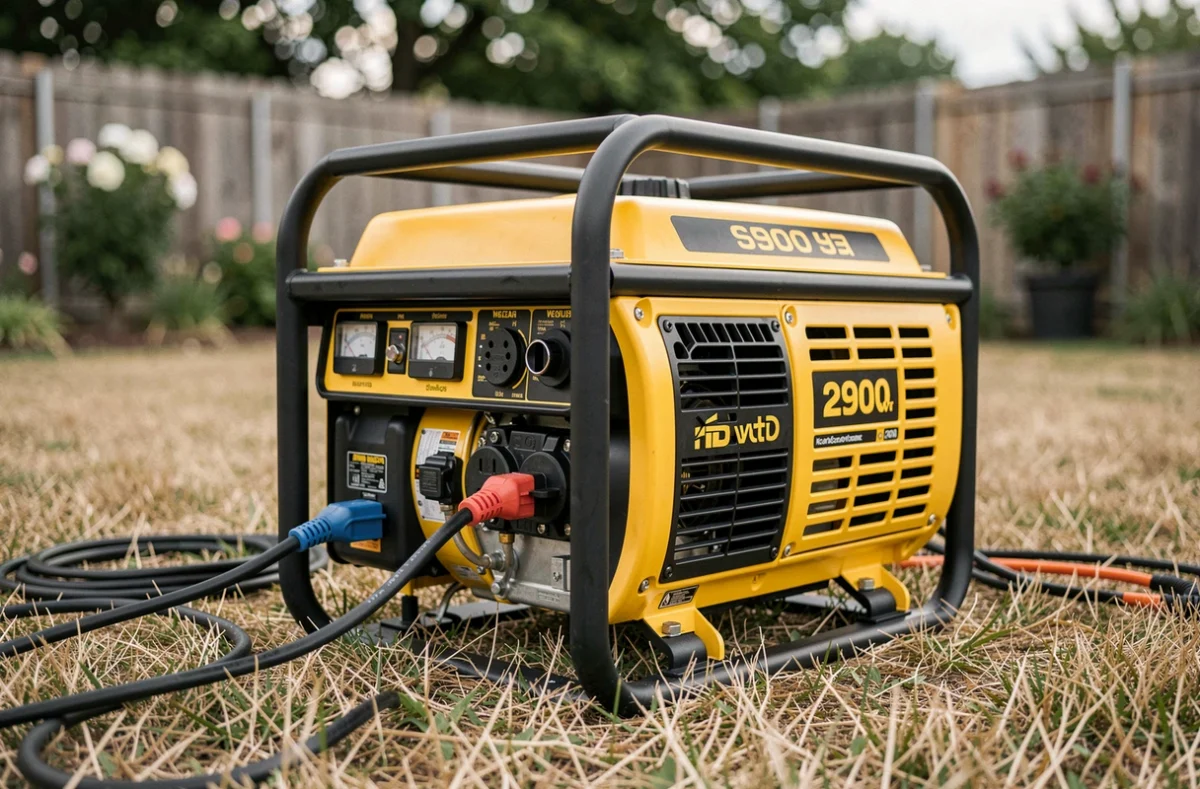
The Zeus range of generators is positioned in the portable petrol generator segment for household use. The 2900-watt model is aimed at households looking for a backup power source during outages or for occasional outdoor use.
Several brands compete in this power range with similar specifications. For buyers, the key question is not so much the advertised wattage as what it can actually power, under what conditions, and with what limitations.
Rated power and starting power: what 2900 watts can really handle
A maximum power figure on a product page does not reflect a generator’s actual capacity for continuous operation. Rated power is always lower than the advertised maximum power, sometimes by several hundred watts. Rated power determines what the generator can run continuously without the risk of overloading.
The most common pitfall is the starting power required by connected appliances. A refrigerator, for example, draws much more power when its compressor starts than when it is running steadily. A freezer may require two to three times its rated power for a few seconds. Running a refrigerator, a freezer and a few lights at the same time on a generator in this range is feasible, but adding an electric heater or a hot water tank pushes the total load beyond what the unit can supply.
To check whether your appliances are compatible, add up the rated power of everything that may run at the same time, then make sure the starting surge of the most power-hungry appliance does not exceed the generator’s maximum power. Adding up your actual power requirements before connecting appliances helps prevent overloads and automatic shutdowns. This step is rarely explained in detail on product listings, yet it determines how useful a backup generator will be.
In practice, the Zeus 2900-watt generator can power lighting, food storage appliances and electronic devices, provided you do not run high-wattage resistive appliances at the same time.
Carbon monoxide and outdoor placement: a non-negotiable requirement
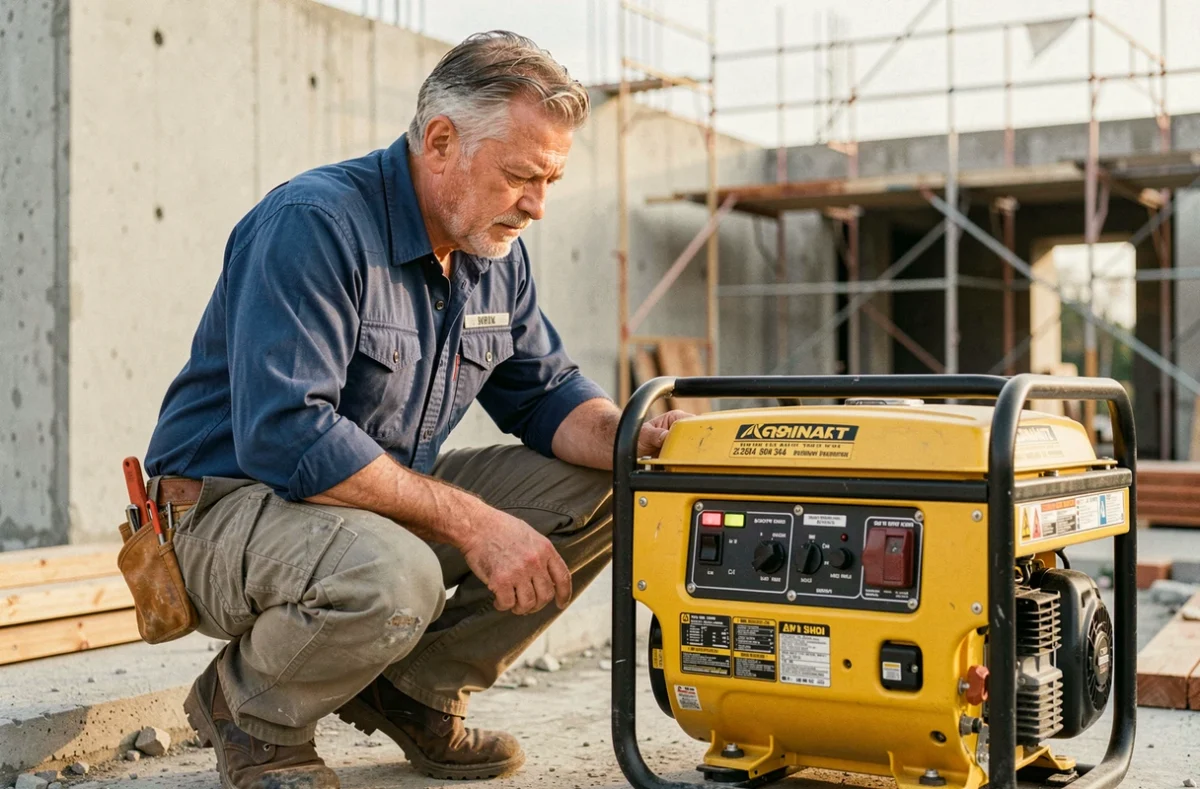
A petrol engine produces carbon monoxide (CO), an odourless, deadly gas. Santé publique France warns that generators must never be operated in an enclosed space, including a garage, basement or motorhome. The unit must be installed outdoors, away from all doors, windows and air intakes to the home.
This requirement has direct practical implications. You will need an extension cord rated for the power draw (with a sufficiently thick cable) and a location sheltered from rain but with good ventilation. In an apartment with no outdoor access, it is simply impossible to use a petrol generator safely.
CO poisonings increase every year in autumn and winter, precisely when power outages lead households to use generators in unsafe conditions. This makes the choice of location a key purchasing consideration: without a suitable outdoor space, a petrol generator of this power is not the right solution.
Noise from the Zeus generator in residential areas: regulations and neighbours
A portable petrol generator is generally louder than normal conversation. In residential areas, this noise raises two issues: the comfort of neighbours and local regulations.
Noise nuisance rules take into account duration, frequency and intensity, not just the decibel level. A generator running for several hours may be considered an unreasonable nuisance even if its noise level is below a theoretical threshold. Permitted hours often depend on municipal bylaws, and some municipalities impose stricter restrictions on weekends or in the evening.
Before using a generator regularly or for extended periods, check the rules in your municipality to avoid disputes with neighbours and possible penalties. The location you choose (distance from property boundaries and the direction of the exhaust) also affects how loud it sounds to neighbours.
What to check before first use
- Check municipal noise bylaws, particularly permitted hours for outdoor work and motorised equipment
- Place the generator on a stable surface, several metres from openings in your home and neighbouring property boundaries
- Use an extension cord with a suitable cable gauge for the expected load, so you can keep the generator away from your living space without losing power
- Do not store fuel right next to the generator while it is running, or in an enclosed, unventilated space
Stage V standard and emissions: check the exact model’s compliance
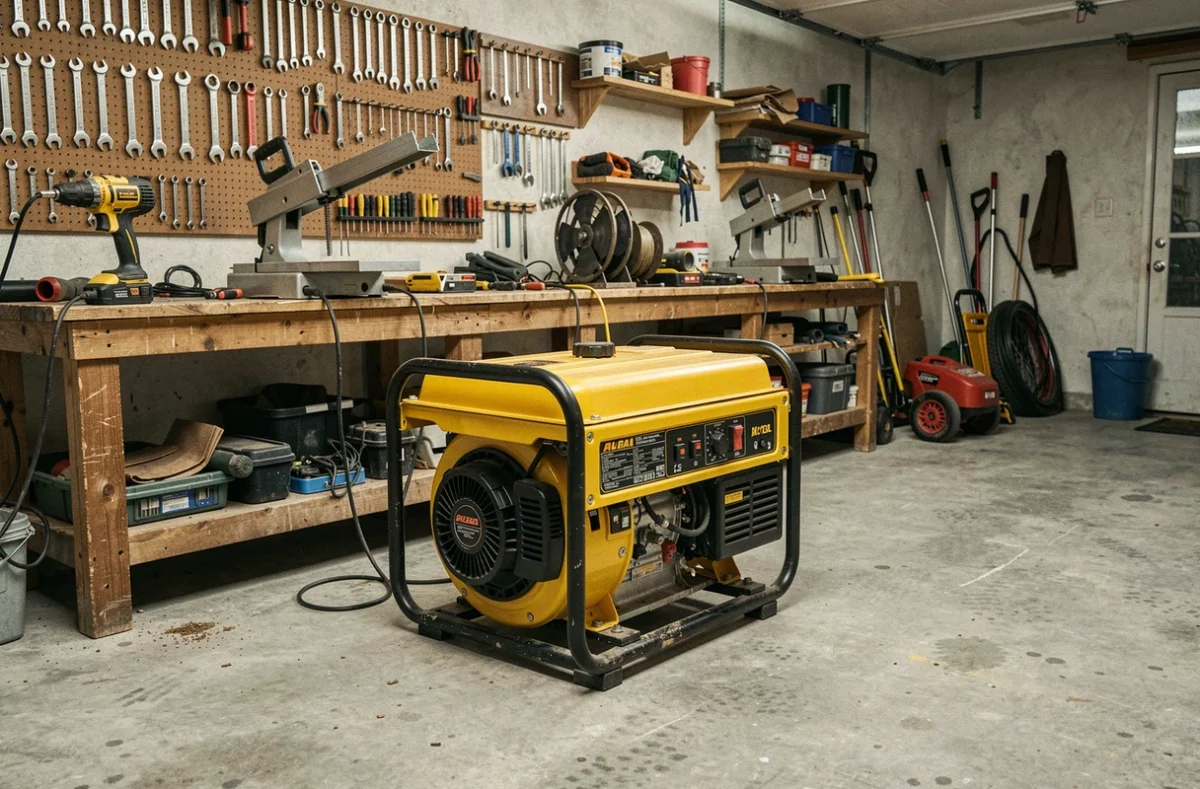
The European Stage V regulation limits pollutant emissions from certain non-road engines, including those used in generators. A Stage V label on a competing model does not guarantee that the Zeus 2900 W meets the standard. Only the exact model’s technical specifications or manufacturer documentation can confirm compliance.
This is worth checking for two reasons. First, compliance with emissions standards determines whether the unit is legal in certain professional or regulated settings. Second, a Stage V-compliant engine produces fewer fine particles, directly improving air quality around the unit, especially when it is running near a living space.
Online product listings sometimes include regulatory claims taken from other models in the same brand’s range. Checking the official documentation for the model you are buying is the only reliable way to confirm that it meets current standards.
Petrol engine and runtime: what the fuel tank determines
A generator’s runtime depends on the tank capacity and the engine’s fuel consumption at the actual load. A generator in this power range uses more fuel at full load than at half load. The runtime stated by the manufacturer often assumes partial load, which may not reflect backup use when several appliances are running at once.
Unleaded petrol also comes with storage requirements. Petrol degrades within a few months unless it is chemically stabilised. A backup generator that sits unused for much of the year may fail to start when you need it most if the fuel has not been replaced or treated with a stabiliser.
A 2900-watt petrol generator can cover a household’s basic needs during a power outage, provided you observe the requirements for placement, noise and load. The unit’s limitations are not apparent from the product listing: they become clear in the realities of installation and everyday use.