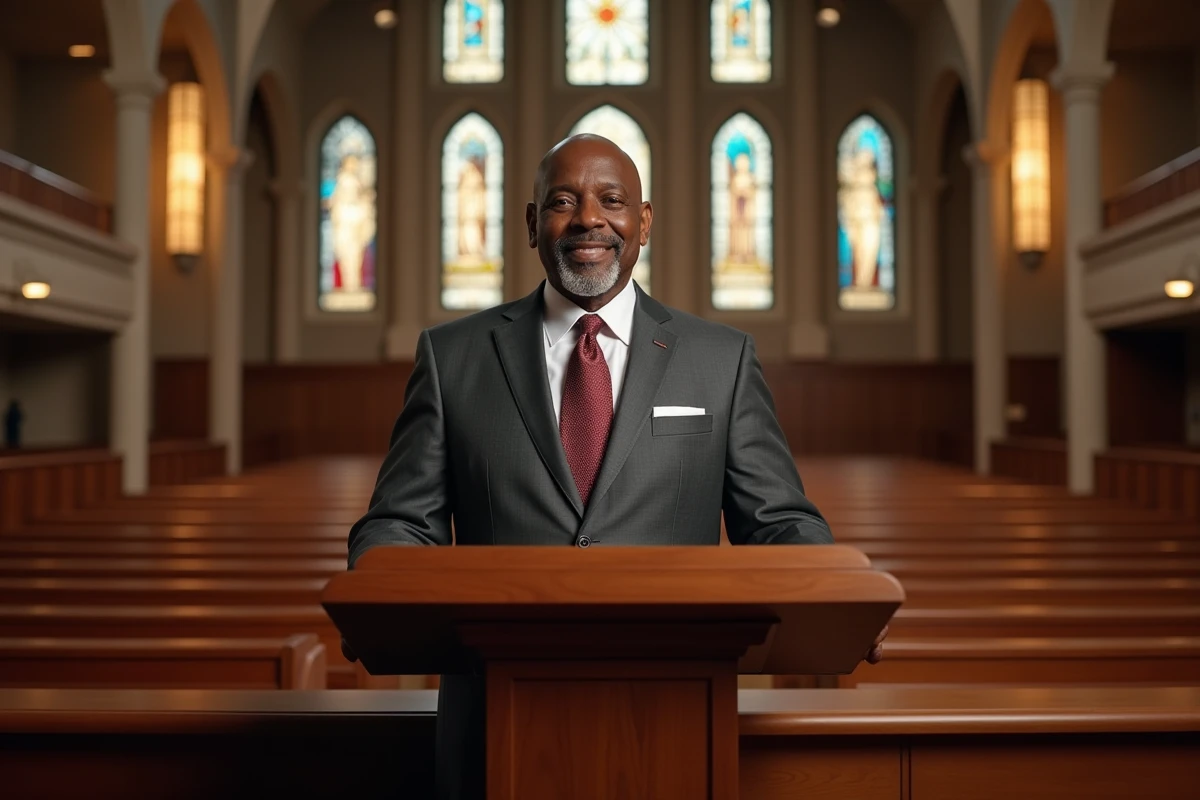
In the United States, some evangelical pastors display wealth that rivals that of business leaders. Private jets, luxury properties, media empires: the fortunes of the richest American pastors in 2024 raise as much fascination as questions about the economic model of megachurches.
Tax Exemptions for Megachurches: The Mechanism Behind the Fortunes
Before discussing numbers, it is essential to understand a mechanism often overlooked. Religious organizations in the United States benefit from a very favorable tax status. They do not pay federal income tax on their revenues and are not required to publish their accounts, unlike other non-profit organizations.
This framework allows pastors leading large congregations to receive substantial salaries, occupy housing provided by the church (tax-exempt via the “parsonage allowance”), and accumulate additional income. Book sales, royalties from television shows, paid speaking engagements: these parallel activities contribute to considerable personal fortunes.
In April 2023, the Senate Finance Committee resumed its work on the tax exemptions for religious organizations, explicitly citing televangelists owning private jets and luxury properties as a transparency issue. A topic that details Joel Osteen’s fortune in 2024 and those of his peers shows how these fortunes rely on a unique regulatory framework worldwide.
Kenneth Copeland and Joel Osteen: Two Models of Pastoral Wealth
Among the richest American pastors, two names consistently top the rankings.
Kenneth Copeland tops the list with an estimated fortune of $300 million. Based in Texas, he has led Kenneth Copeland Ministries for decades. His ministry owns a vast property that includes a private airport. His income comes from televangelism, book sales, and seminars.
Joel Osteen, pastor of Lakewood Church in Houston, is among the most media-savvy. His church, located in a former sports complex, welcomes tens of thousands of worshippers each week. Osteen also derives a significant portion of his income from his bestselling books, which have been translated into many languages.
What distinguishes these two pastors is diversification. Their wealth does not solely come from donations from congregants. It is based on an ecosystem of merchandise, television rights, and real estate investments.
Revenue Sources for Millionaire Pastors: Beyond the Tithe
You might imagine that the wealth of these pastors comes from Sunday collections. The reality is more complex. Revenues are distributed across several channels:
- Book sales and audio/video programs: several of these pastors are bestselling authors, with books sold in millions of copies worldwide
- Television shows and digital platforms: broadcasting sermons on cable channels or streaming generates advertising revenue and online donations
- Paid conferences and seminars: these events attract thousands of participants, sometimes charging several hundred dollars per ticket
- Real estate investments and financial placements: some pastors’ personal properties include mansions, ranches, and sometimes private jets
David Oyedepo, a Nigerian pastor often cited in global rankings with an estimated fortune of $150 million, exemplifies this logic. Founder of Living Faith Church and owner of several private jets, he combines preaching, publishing, and managing private universities.
Regulatory Pressure and Disengagement of Young Worshippers
These pastoral fortunes are not without opposition. For several years, American lawmakers and non-governmental organizations have called for a tightening of tax oversight of megachurches. The debate centers on the obligation to publish financial accounts, as traditional foundations and charities already do.

At the same time, a fundamental trend is undermining the model. The Barna Group, an organization specializing in studying religious behaviors, has highlighted since 2022 a marked disengagement of 18-29 year-olds from large evangelical churches. Young adults increasingly perceive these institutions as too commercial or too distant from their concerns.
This decline in participation among new generations raises a sustainability question. If donations decrease and attendance declines, the empires built by these pastors could see their revenues gradually erode.
Rich American Pastors in 2024: A Specifically American Phenomenon
Why is this phenomenon so pronounced in the United States and not elsewhere? Several factors combine.
The lack of a strict separation between religious activity and commercial activity allows pastors to monetize their influence without major restrictions. The tax status of American churches remains the most permissive among Western democracies.
The culture of “prosperity gospel” plays a central role as well. This doctrine teaches that financial success is a sign of divine blessing, legitimizing the personal enrichment of the pastor in the eyes of their congregation.
Finally, market size matters. The United States has hundreds of megachurches (congregations of over 2,000 weekly attendees), a phenomenon unmatched in Europe or Asia. Each megachurch operates like a small business, with annual budgets sometimes comparable to those of SMEs.
The fortunes of the richest American pastors in 2024 are therefore not anomalies. They are the product of a system that blends faith, favorable taxation, and entrepreneurial logic. As long as this framework remains in place, new names will likely continue to be added to the list.