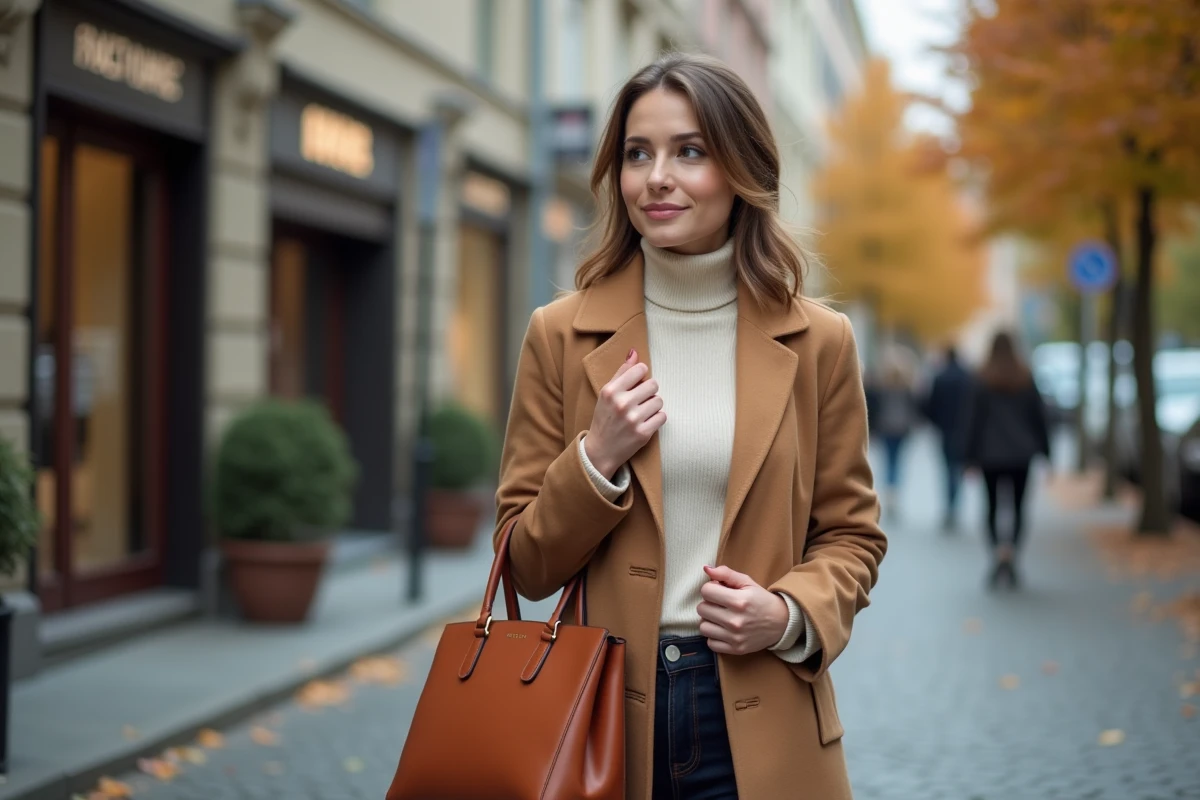
Fashion trends refer to the stylistic directions adopted by brands and designers for a given season: cuts, materials, dominant colors, highlighted accessories. Following these trends does not mean replacing your wardrobe, but rather identifying pieces or details that can modernize existing outfits.
Statement accessory: transforming an outfit from day to night
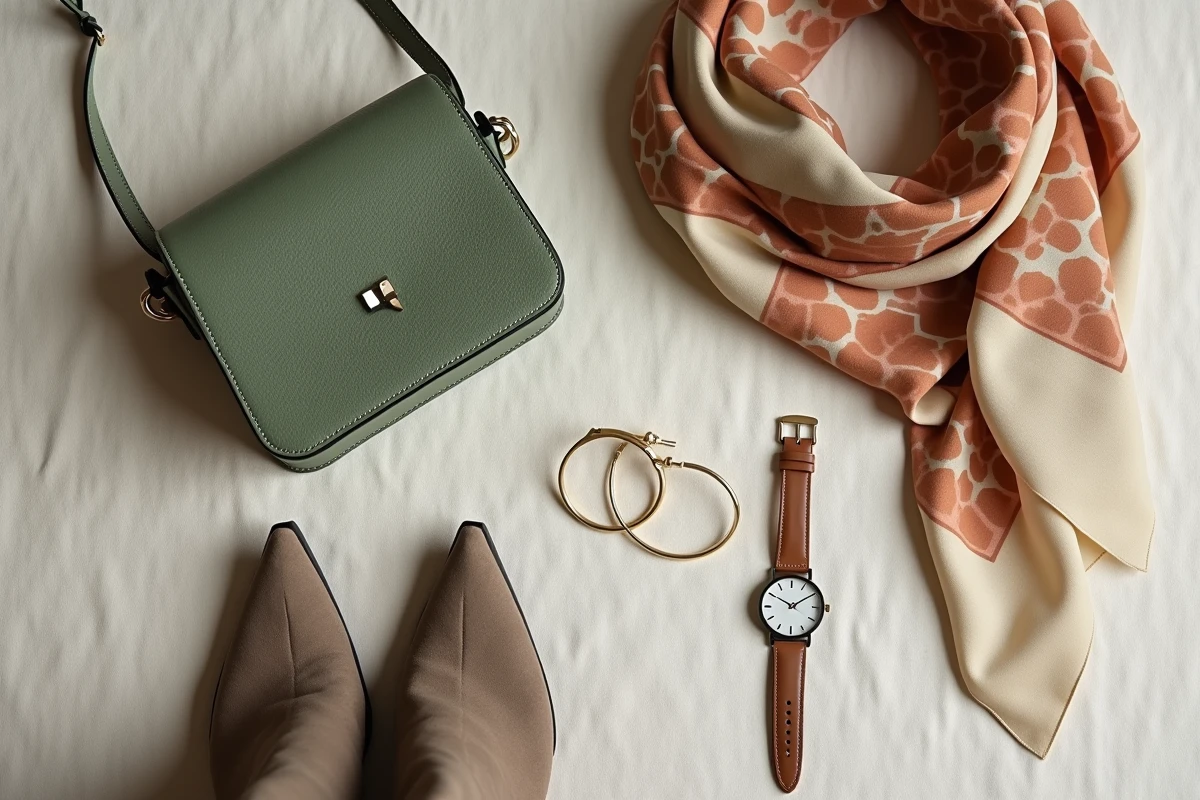
The French fashion press highlights an approach that is gaining ground: one single accessory is enough to elevate a basic look to an evening outfit. Jewelry sandals, metallic bags, XXL earrings—the principle relies on a unique element with a strong visual presence, rather than a complete change of clothing.
This “day-to-night” logic has a direct practical advantage. It reduces the number of pieces to own and simplifies the transition between a workday and an outing. A straight pant worn with white sneakers in the morning becomes a dressed-up silhouette in the evening with golden sandals and a structured clutch.
To spot other pieces and accessories that work according to this principle, the collections offered on the official Mode by S website illustrate this accessory-centered approach well.
A common mistake is to multiply eye-catching accessories on the same outfit. One focal point per look produces a cleaner result than an accumulation of jewelry, patterns, and textures competing for attention.

Coordinated sets: the everyday fashion silhouette
Recent fashion content highlights the coordinated set (matching top and bottom, in the same material or color) as the basis for everyday looks. Crop tops with matching skirts, fluid shirts with pants in the same fabric: the result appears polished without requiring special styling effort.
This format works because it eliminates the most time-consuming step of getting dressed: figuring out which piece goes with which other piece. The coordinated set acts as a visual shortcut to a complete outfit.
Here are a few guidelines for choosing a set:
- Favor a fluid material for everyday use, as it better accommodates variations in temperature and body shape than a rigid fabric
- Opt for a solid color or a subtle pattern if the set is also to be used in a professional context
- Check that the top and bottom can be worn separately with other pieces, which doubles the number of possible combinations in the wardrobe
Wide culottes: the piece that changes status
Culottes have a reputation as a dated garment. Their current version has little in common with the fitted styles of the 2000s. The offered cuts are wide, fluid, sometimes pleated, and wide culottes are now worn as a dressed-up alternative to classic pants.
Paired with a heeled mule or a flat leather sandal, they create an elongated silhouette without resorting to long pants. This option is particularly suited for transitional seasons (spring, early autumn), when temperatures do not justify shorts or thick trousers.
The technical point to watch is the length: culottes that stop at the widest part of the calf visually shorten the leg. The ideal cut falls just below the knee or above the ankle, depending on the height of the shoes worn.
Visible clips and barrettes: hair accessories as fashion pieces
Hair accessories are taking a step forward. Wide clips, sculpted barrettes, and embellished elastics are no longer just for holding a hairstyle. They are worn as full-fledged style elements, visible and embraced.
This micro hair trend expands the definition of fashion accessories beyond bags, jewelry, or shoes. A colored resin clip placed on the side of the head adds a pop of color to a monochrome outfit, effortlessly and without a significant budget.
The appeal of this approach lies in its accessibility. Unlike a bag or a pair of shoes, hair accessories represent a minimal investment. They allow for testing a color or style without commitment.
Colors and materials: choices that structure a fashion wardrobe
Rather than following every seasonal color, a more sustainable strategy is to build your wardrobe around two complementary registers:
- A base of neutral tones (beige, off-white, gray, navy) that forms the reusable foundation from one season to the next
- Two or three pieces in the season’s standout color, worn in rotation with the basics
- At least one textured material (wrinkled linen, ribbed knit, washed satin) that adds depth without introducing additional color
Focusing on material as much as on color allows for creating visual contrast in a simple outfit. A thick cotton t-shirt worn under a linen blazer does not need a bright color to create a polished effect.
Fashion trends and accessories evolve each season, but the pieces that endure in a wardrobe share a common trait: they work with what already exists in the closet. A statement accessory, a coordinated set, or well-cut culottes bring more renewal than a compulsive purchase of isolated garments.