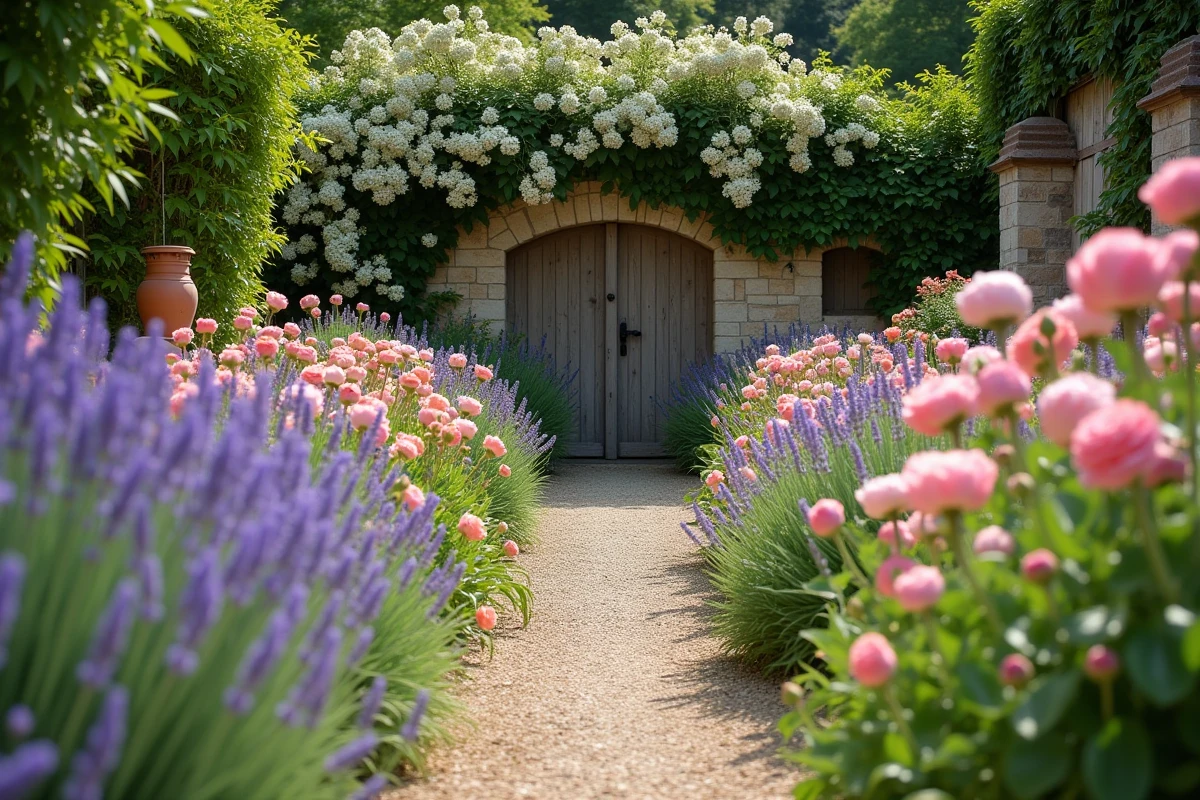
A garden that remains colorful from January to December does not rely on a collection of dozens of species. The principle is simpler: choose a few flowers whose blooming periods alternate, season after season. It is also essential that each plant is suited to your soil and exposure; otherwise, even the most beautiful variety will wither in a few weeks.
Soil and exposure: the real filter before choosing your flowers
You may have noticed that a beautiful lavender at your neighbor’s can languish in your own flowerbed? The difference rarely lies in watering. It comes from the soil and light.
A clayey, heavy, and moist soil in winter is not suitable for the same plants as a sandy soil that dries quickly. Before buying anything, take a handful of soil. If it sticks and forms a compact ball, your soil is heavy. If it crumbles between your fingers, it is well-draining.
Matching the plant to the soil avoids most failures in flowerbeds. A daylily thrives in fresh to heavy soil. A butterfly lavender requires well-draining, poor soil. Planting one in place of the other sets up disappointment. Flower catalogs often offer selections by color or season, and you will find on the website Une Fleur Un Jardin a classification that makes this search easier by plant type.
Regarding exposure, a simple rule works in most French regions: Mediterranean perennials (lavender, sage, gaura) want full sun and dry soil. Woodland perennials (hellebore, brunnera, astilbe) prefer partial shade and cool soil. Mixing these two families in the same flowerbed creates an imbalance where no one is happy.
Blooming relay: planning a flower-filled garden all year round
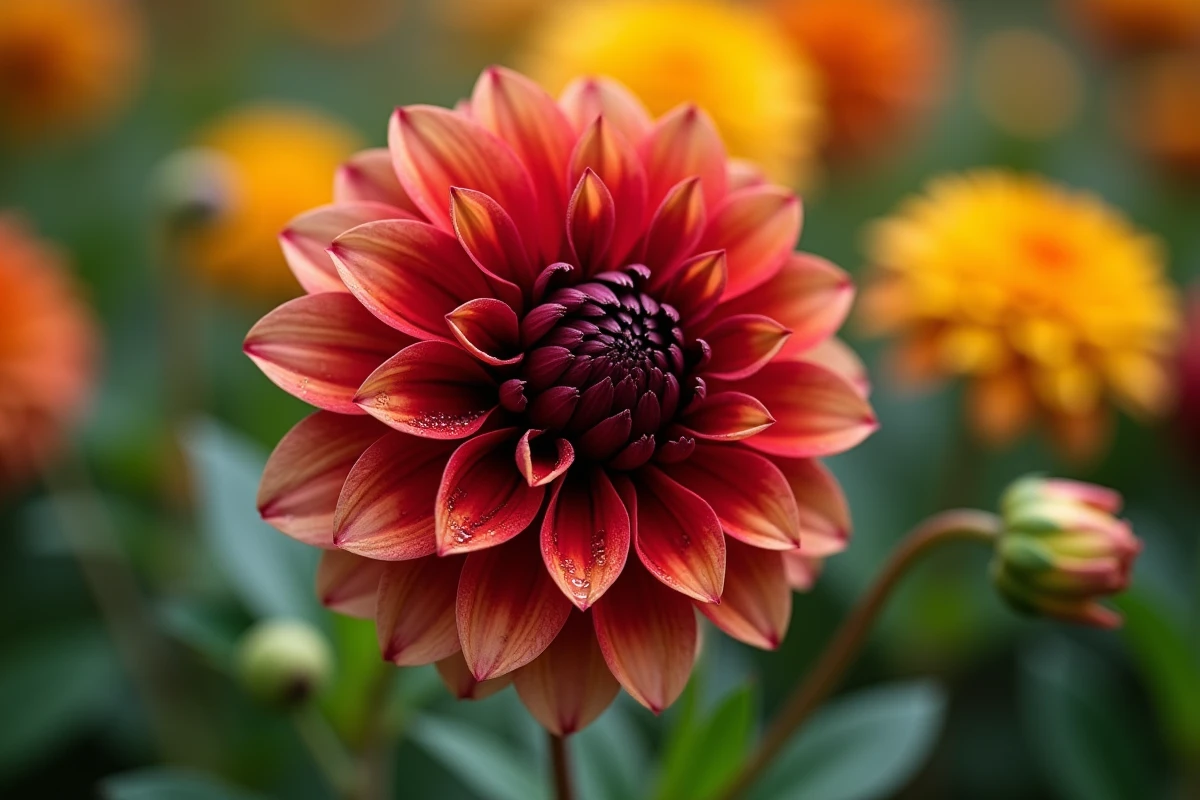
Floral continuity relies on a relay principle. Each group of plants blooms for a few weeks to a few months, then passes the baton to the next. Four relays are enough to cover the twelve months.
Winter and late autumn flowers
This is the most often forgotten link. Between November and March, most gardens remain devoid of color. Hellebores bloom in the heart of winter, sometimes as early as December, with colors ranging from pure white to dark purple. Winter heathers (Erica carnea) take over in acidic soil and offer pink or white carpets for several months.
Add early bulbs like snowdrops or crocuses, which break through the ground as early as February. This trio is enough to fill the winter “visual gap” that many gardeners experience without knowing it can be easily corrected.
Spring blooming
Daffodils and tulips provide the spectacle from April to May. Planted in autumn, these bulbs require little maintenance once established. Behind them, spring perennials take over: gauras begin their blooming as early as late spring and continue until the first frosts.
Spring bulbs should be planted in October to bloom effortlessly the following year. Consider planting them in groups of ten or fifteen rather than in a line for a more natural effect.
Summer and late season
Summer concentrates the greatest diversity of blooming. The daylily, with its large trumpet-shaped flowers, tolerates heavy soils well and blooms from June to August. Lantana, on the other hand, prefers full sun and well-draining soil. It blooms relentlessly until the frosts, but does not withstand the cold in the northern half of France.
For the late season, asters and sedums extend the color until November. Sedums have an additional advantage: their foliage remains decorative even after blooming.
Drought-resistant flowers: a priority choice
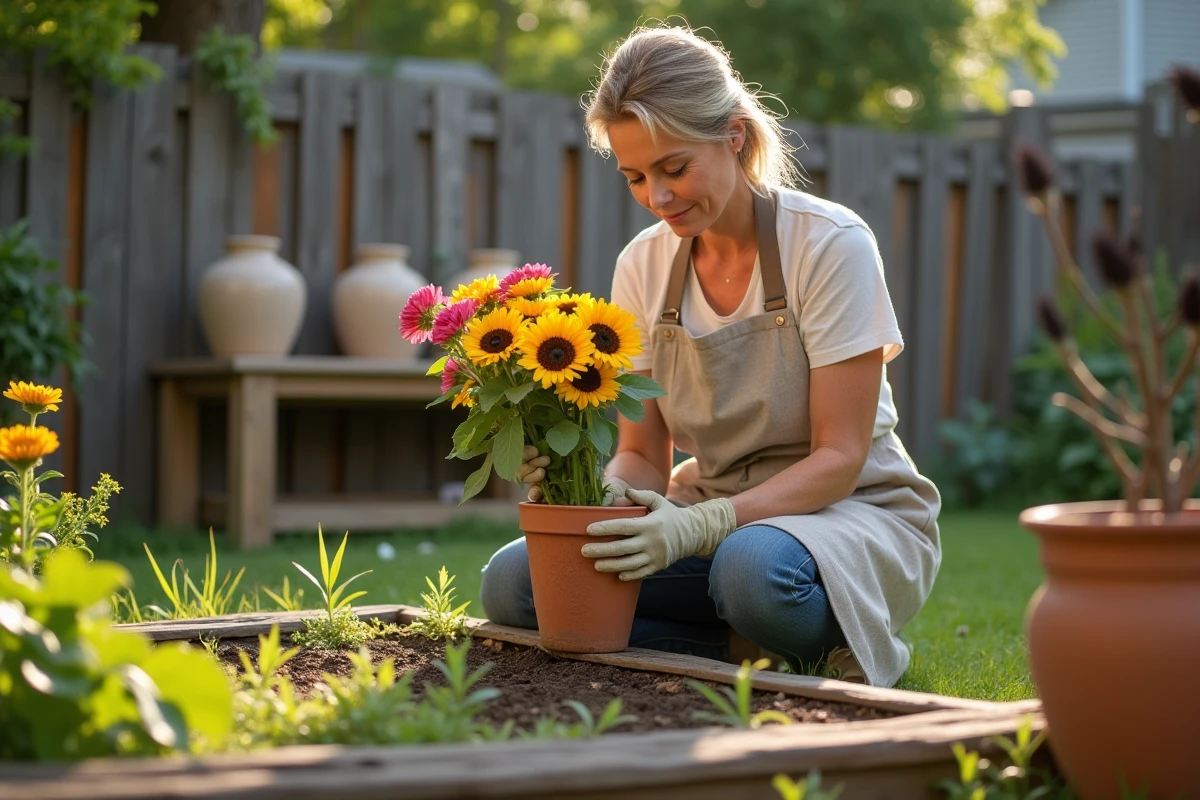
With the tightening of watering restrictions in many municipalities, especially since the Water Plan presented by the government on March 30, 2023, choosing water-efficient flowers is no longer a luxury but a practical necessity. A flowerbed that relies on daily watering in July becomes a problem as soon as a prefectural decree is issued.
Several perennials combine beauty and water efficiency:
- Butterfly lavender is satisfied with rain once established and blooms abundantly in poor, well-draining soil, in full sun.
- Jerusalem sage (Phlomis) withstands prolonged periods without water and produces very graphic yellow or mauve flowers.
- Gaura, with its fine stems and small white or pink flowers, withstands dry summers while adding a light movement to the flowerbed.
- Large-flowered purslane quickly covers the ground at the edge of the terrace and requires virtually no watering.
The common point of these plants: they come from regions with hot, dry summers. Their root systems dive deep to seek residual moisture. A well-drained soil is their only real requirement.
Creating a sustainable flowerbed: three common mistakes to avoid
Why do some flowerbeds seem to fade after two or three years? The reasons are often the same.
The first mistake is grouping plants with opposing needs. A woodland hellebore planted next to a lavender in full sun: one of the two will suffer. Grouping plants by soil and exposure profile simplifies maintenance and improves the longevity of the flowerbed.
The second mistake is neglecting heights. A successful flowerbed places tall plants (gaura, aster) in the background and ground covers (purslane, heather) at the edge. Without this graduation, small plants disappear behind the large ones by June.
The third mistake is betting everything on summer. A garden that explodes with colors in July but remains bare from November to March eventually becomes tiresome. Integrating one or two evergreen shrubs (a viburnum, a boxwood) provides visible structure even when the perennials are dormant.
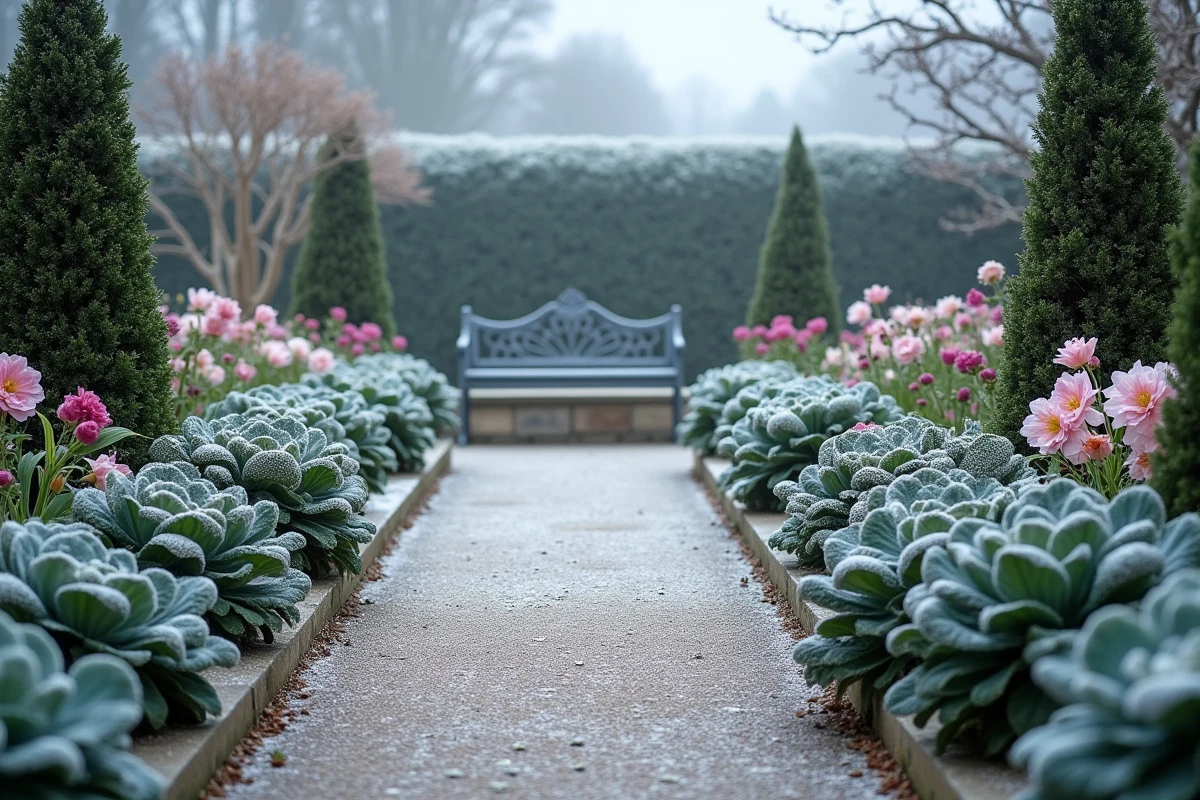
A flower-filled garden all year round ultimately depends on a few well-made choices: knowing your soil, respecting the needs of each plant in terms of light and water, and organizing a blooming relay over four seasons. It is better to have five or six well-placed species than twenty poorly matched ones competing for the same space.