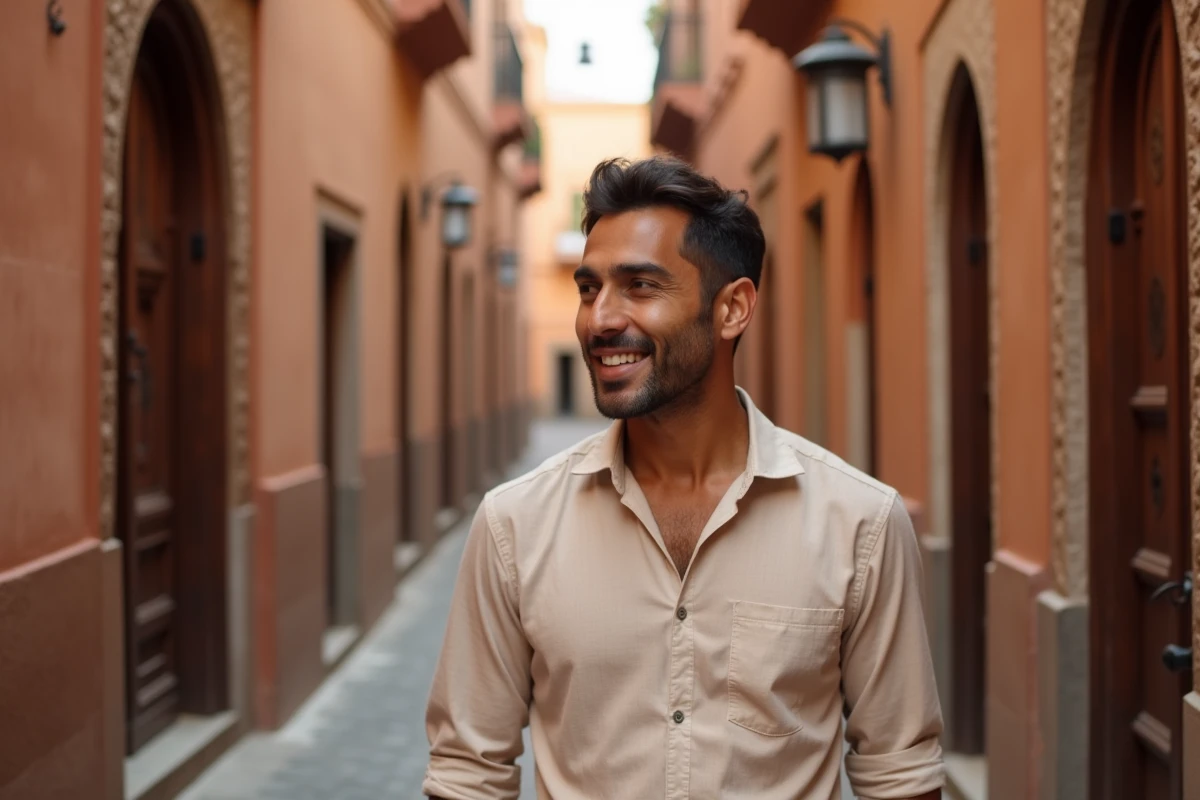
Moustafa El Oudi and Marwa Cheikh share Maghreb roots, a technical background, and a common belief: social innovation only works if it is rooted in local realities. Their respective journeys have led them to build a network that combines green technology and artisanal know-how, a rare positioning in the Francophone entrepreneurial ecosystem.
GreenTech and Craftsmanship: The Hybrid Model of El Oudi and Cheikh
Most entrepreneurial duos from the Maghreb focus on textile export or food trade. Moustafa El Oudi and Marwa Cheikh have taken a different path by combining GreenTech and traditional craftsmanship within the same network.
The idea is simple: use technological tools (digital platforms, online training, rapid prototyping) to modernize artisanal sectors without distorting them. This hybridization allows artisans to reach broader markets while retaining their manufacturing techniques.
Why this choice rather than a purely tech model? Because craftsmanship remains the largest informal employer in several countries in Africa and the Middle East. By adding a digital layer, the duo creates a bridge between the informal economy and recognized innovation circuits. To learn more about Moustafa El Oudi and Marwa Cheikh, their trajectory sheds light on how these two worlds mutually nourish each other.

Intersecting Paths of Moustafa El Oudi and Marwa Cheikh: Two Complementary Trajectories
Moustafa El Oudi comes from a technical background. His training directed him towards environmental engineering, with a strong sensitivity to social impact projects. It is through GreenTech Africa that he has structured his actions, offering training programs aimed at youth in several African countries.
Feedback from the field in Dakar indicates a notable improvement in the employability of young people trained through this program, with increased integration into eco-responsible startups since late 2025.
Marwa Cheikh, on her side, brings expertise in network management and cultural mediation. Her role involves weaving connections between institutional partners, artisans, and funders. Without this relational skill, El Oudi’s technical model would remain a prototype without outlets.
Their complementarity is based on a clear division:
- Moustafa El Oudi leads the design of training programs and technological partnerships, particularly with hubs in Senegal and Jordan
- Marwa Cheikh manages local anchoring, coordination of artisans, and dialogue with public institutions
- Strategic decisions (geographic expansion, choice of sectors) are made jointly, avoiding the frequent blind spots in structures led by a single founder
Synergy Network: International Expansion and Tech Hubs in Africa
Since early 2026, the Synergy network led by El Oudi and Cheikh has expanded its partnerships to tech hubs in Senegal and Jordan. This geographic expansion is not trivial: it targets two regions where the demand for vocational training far exceeds the existing supply.
The choice of Jordan, in particular, responds to a specific logic. The country hosts a significant refugee population, and traditional professional integration measures struggle to meet the needs. By offering hybrid training (digital skills applied to craftsmanship), the Synergy network provides a pathway to the job market that does not solely depend on formal qualifications.
In Senegal, the partnership builds on the existing GreenTech Africa ecosystem. Intercontinental exchanges in social innovation have seen a significant increase thanks to these new connections. Participants trained in Dakar can now collaborate with Jordanian project leaders on common issues: water management, decentralized solar energy, and the valorization of local materials.
Inclusion and Public Policy in France: What the Hybrid Model Can Inspire
Have you ever noticed that debates about immigration in France almost always focus on two extremes, unconditional welcome or closure, without exploring concrete models of inclusion through economic activity?
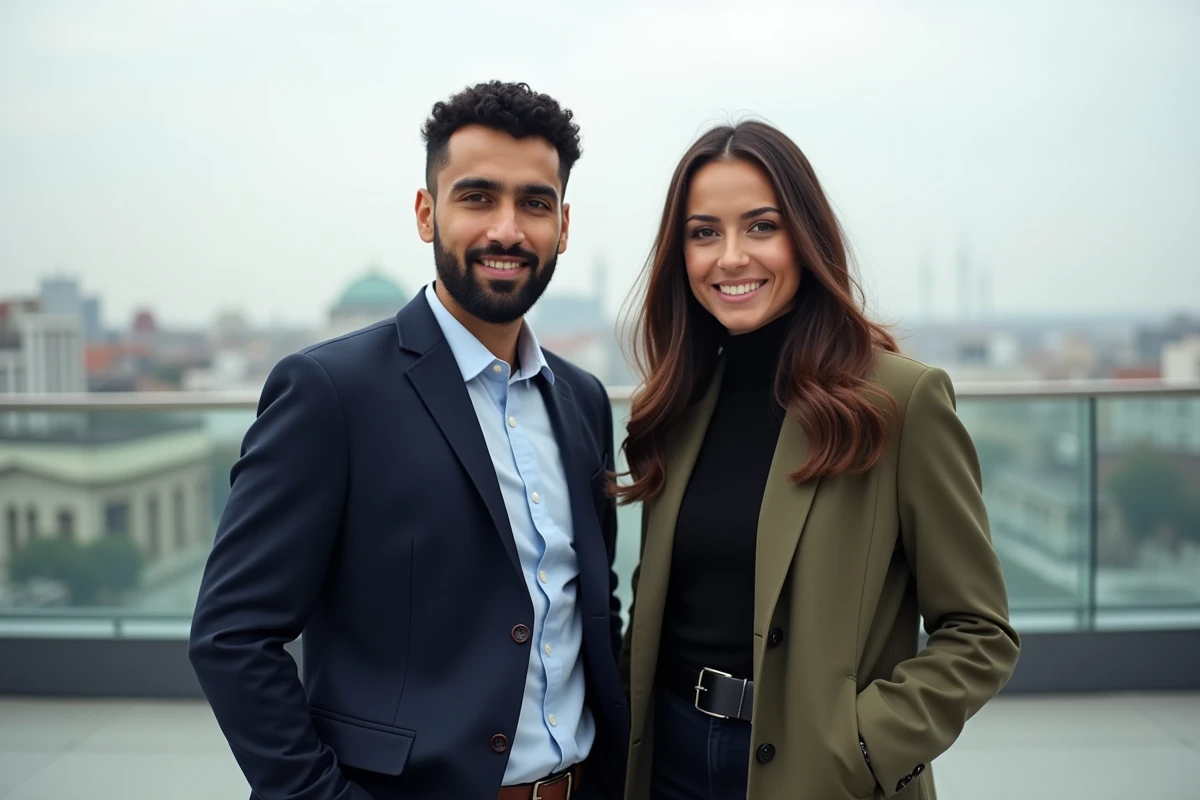
The journey of El Oudi and Cheikh offers a third way. Their approach is based on a testable principle: train for a hybrid profession rather than impose a standardized integration path. Instead of only offering language courses or observation internships, their method combines technical learning, professional networking, and the valorization of skills already acquired in the country of origin.
This model could inform discussions in France, where the European directive 2026/452 of April 2026 encourages member states to develop inclusion measures through social entrepreneurship. The regulatory framework exists, but operational examples are lacking.
Three conditions seem necessary to transpose this type of approach:
- A mixed funding model (public-private) that does not depend on a single budget cycle, to ensure the continuity of training over several years
- A recognition of artisanal skills acquired outside the French certification system, which implies an evolution of existing reference frameworks
- A strong territorial anchoring, with local intermediaries capable of linking participants to the local economic fabric
The El Oudi-Cheikh duo does not claim to have invented inclusion through work. Their contribution lies in the method: starting from existing know-how, adding an accessible technological layer, and structuring a network that transcends national borders. It is this logic of GreenTech-craftsmanship hybridization that distinguishes their approach from traditional integration assistance programs.
The question is not to copy their model as it is, but to extract the reproducible mechanisms. Training artisan-entrepreneurs capable of operating in multiple markets, connecting training hubs across continents, involving beneficiaries in the governance of the network: these building blocks exist, they work in Dakar and Amman. The challenge remains to see if the French institutional framework can accommodate them without rigidifying them.